Customs Permits
Freight Forwarding Service Singapore: Customs, Documentation and Execution Support
Key Takeaways
A freight forwarding service singapore arrangement works best when transport, customs and documentation are treated as one connected process.
- Select the transport mode around urgency, cargo characteristics and total landed cost.
- Confirm HS codes, customs value, permit needs and GST treatment before dispatch.
- Keep commercial, transport and regulatory documents consistent across the shipment.
- Agree who owns each hand-off, update and exception from collection to delivery.
- Compare forwarders on operational control, communication and relevant trade-lane experience.
Understanding the role of a freight forwarding service in Singapore
A freight forwarder coordinates the practical movement of cargo between shipper, carrier, warehouse, customs intermediary and consignee. The work extends beyond booking space: it includes planning hand-offs, checking information and responding when the original plan changes. Singapore’s position as a major trading hub makes disciplined coordination particularly valuable. The right arrangement gives the shipper a clear view of responsibilities without suggesting that a private service replaces Singapore Customs or other authorities.
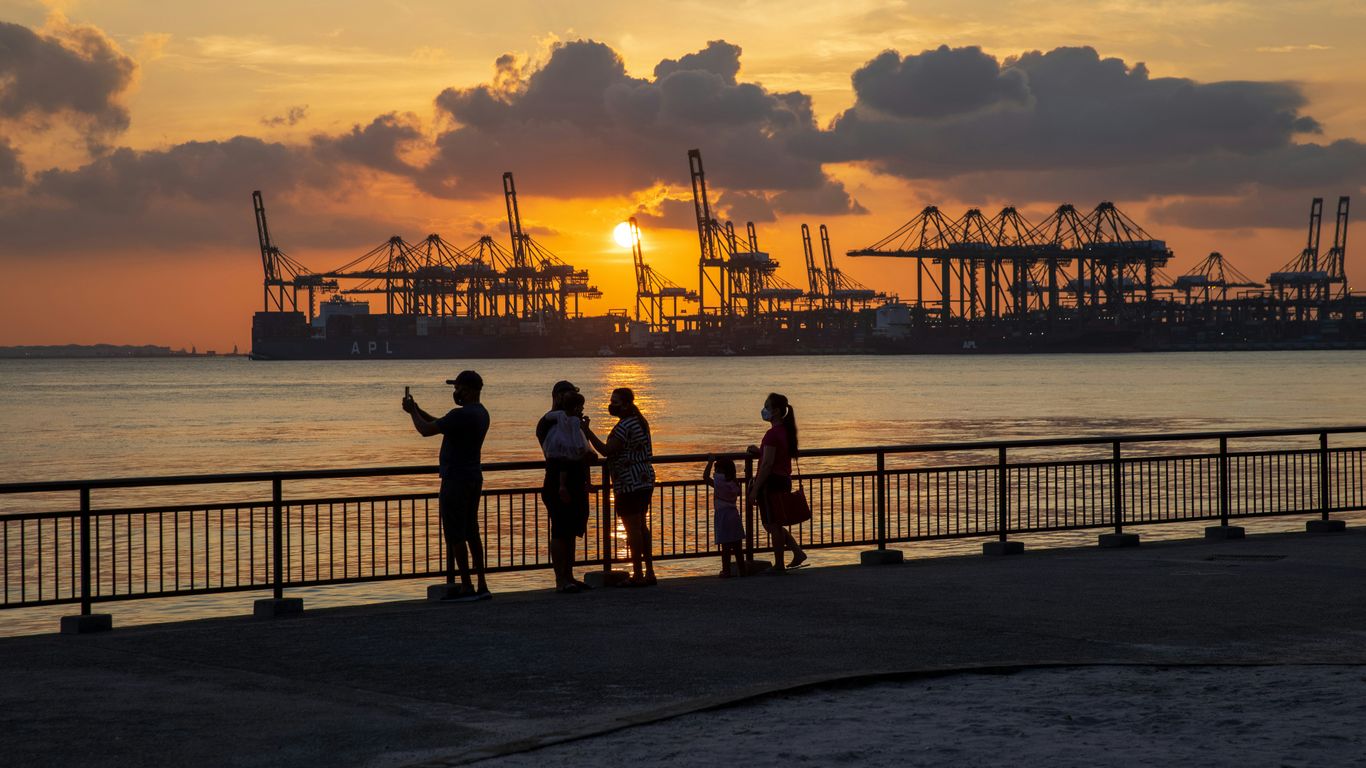
What a freight forwarder manages on the shipper’s behalf
The forwarder may arrange collection, cargo preparation, carrier bookings, export handling, transport documents, customs coordination and delivery instructions within the agreed scope. The shipper remains responsible for providing truthful commercial information and meeting its contractual obligations. A useful working relationship sets out who supplies each document, who approves changes and who receives status updates. This is the practical distinction between having a shipment moved and having its workflow actively coordinated.
How Singapore’s port, airport and free trade zones affect shipment planning
A plan should account for the chosen gateway, cargo cut-off, handling requirements and whether goods enter Singapore for local use, storage or onward movement. Port and airport processes are not interchangeable, and free trade zone arrangements may alter when duties and taxes become relevant. The forwarder should confirm the intended movement before booking rather than assuming that a transhipment follows the same process as an import. Small timing differences at a gateway can affect warehouse release and the next connection.
The difference between freight forwarding, customs clearance and logistics
Freight forwarding is the coordination of transport and related shipment activity. Customs clearance concerns declarations, permits, classification, valuation and communication with the relevant authorities. Logistics is broader, potentially covering inventory, warehousing, fulfilment and distribution. These functions often overlap operationally, but the contract should identify which party is responsible for each one; freight forwarding guidance is useful when mapping those boundaries.
When businesses benefit from outsourced forwarding support
Outsourcing is often sensible when shipment volume is irregular, staff lack customs experience or several suppliers must be brought together under one movement. It can also help when cargo is urgent, controlled or unusually valuable, provided the provider’s role and limits are documented. Importers and exporters should still retain approval over commercial details and declarations. A single accountable contact can reduce duplicated emails and make unresolved tasks easier to identify.
Choosing the right transport mode and shipment plan
Transport selection is a commercial decision, not simply a choice between the fastest and cheapest quote. Air, sea and multimodal routes each impose different requirements for timing, packing, handling and hand-over. The shipment plan should begin with the delivery date and cargo profile, then test whether the proposed route can meet both. For a practical overview of air movements, including chargeable weight and carrier cut-offs, see this air freight planning guide.

Comparing air freight, sea freight and multimodal transport
Air freight usually suits time-sensitive, compact or high-value cargo, while sea freight is commonly considered for larger volumes where transit time allows. Multimodal transport combines modes and can be useful when the origin or destination is not directly served by the main gateway. The comparison should include collection, handling, customs, delivery and possible storage, rather than only the line-haul rate. Cargo sensitivity, dimensions and regulatory status may rule out an apparently attractive option.
Selecting routes through Singapore’s air and sea gateways
A route should be assessed for connection reliability, available capacity, handling points and the requirements at the destination. Singapore may be the origin, destination or an intermediate point, and those roles lead to different paperwork and release instructions. Confirm whether the quote is airport-to-airport, port-to-port or door-to-door. Written route assumptions are valuable when schedules change or a shipment must be rerouted.
Balancing transit time, freight cost and cargo requirements
The lowest freight rate can become expensive if it requires extra handling, missed cut-offs or extended storage. Compare transit commitments with the cargo’s shelf life, production schedule, insurance needs and delivery appointment. Total landed cost matters because transport is only one part of the financial exposure. A sensible plan leaves enough time for document review and customs processing rather than treating those steps as invisible.
Planning consolidation, full-container and less-than-container loads
Consolidation can reduce the cost of smaller shipments, but it introduces additional receiving, sorting and deconsolidation points. A full-container load may provide more control over the unit and loading plan, while less-than-container cargo requires careful coordination with other consignments. The choice depends on volume, frequency, cargo compatibility and delivery urgency. Ask how the provider handles cut-offs, cargo segregation and any charges arising at intermediate facilities.
| Transport plan | Usually suits | Main planning concern |
|---|---|---|
| Air freight | Urgent or compact cargo | Chargeable weight and flight cut-off |
| Full-container load | Larger, dedicated shipments | Container availability and loading schedule |
| Less-than-container load | Smaller sea consignments | Consolidation and deconsolidation timing |
| Multimodal movement | Complex origins or destinations | Handover visibility between modes |
The table is a starting point, not a fixed rule. A forwarder should test the proposed plan against the actual cargo dimensions, collection window and delivery obligation before confirming space.
Managing Singapore customs clearance
Customs clearance should be prepared before cargo reaches the point at which a missing permit can stop its movement. The process depends on whether the cargo is imported, exported, re-exported or transhipped, and on the goods themselves. Classification and valuation decisions should be supported by reliable commercial information. Businesses can use this customs clearance guide to structure an internal review before instructing a declaring agent.

Import, export and transshipment procedures
Import cargo normally requires the relevant declaration and release arrangements before delivery into Singapore, while export and transhipment movements follow their own permit and hand-over requirements. The intended customs procedure should be confirmed with the parties handling the cargo, especially where goods are not entering the local market. A forwarder coordinates information and timing, but the importer or exporter remains accountable for the accuracy of its trade details. Early confirmation prevents a shipment being booked under the wrong movement type.
HS codes, customs value, duties and GST considerations
The HS code affects how goods are described and whether duties, GST or additional controls may apply. Customs value should reflect the applicable transaction information and supporting freight or insurance details where required. Do not guess a classification simply because a similar item was previously accepted. Keep the reasoning and source documents available so that questions can be answered consistently; a detailed HS code and valuation checklist can support that preparation.
Controlled goods, licences and regulatory approvals
Some goods require licences, certificates or approvals from agencies other than Singapore Customs. These requirements may depend on the product, quantity, end use or route. The responsible party should identify them before collection and confirm which documents must accompany the declaration. A forwarder can coordinate the submission within its agreed scope, but it cannot guarantee an external authority’s approval or substitute for the licence holder.
Using TradeNet and working with Singapore Customs
TradeNet is used for electronic permit applications, and declarations must contain information that agrees with the underlying commercial and transport records. A declaring agent can submit information on the trader’s behalf where appointed, but the trader should review the data and retain supporting records. Rejections and queries are easier to resolve when the shipment file is complete. TradeNet declaration support offers a useful framework for assigning checks before submission.
A simple pre-submission sequence can keep responsibility visible:
- Confirm the importer, exporter, consignee and movement type.
- Reconcile the invoice, packing list and transport document.
- Validate the HS code, value, origin and permit requirements.
- Record who reviews the declaration and who handles any query.
This sequence does not replace official requirements, but it gives the shipping team a repeatable control point. It also makes it clearer which issue must be corrected before cargo is released.
Preparing accurate shipping documentation
Documents are the shared language between the commercial team, carrier, warehouse, declaring agent and authority. A minor mismatch in quantity, weight, consignee or description can create questions at an inconvenient stage. Preparation should therefore begin while the shipment is being planned, not after the truck or flight has been booked. A dedicated shipping documents checklist can help teams review the file in a consistent order.

Commercial invoices, packing lists and transport documents
The commercial invoice should describe the goods, parties, value and transaction clearly, while the packing list should explain how the cargo is arranged and measured. Transport documents must reflect the actual packages, weights and routing. Descriptions such as “parts” or “samples” may be too vague for a proper review. Use one controlled set of shipment data so that later edits do not create conflicting versions.
Bills of lading, air waybills and certificates of origin
A bill of lading or air waybill records the transport arrangement and identifies the relevant parties, cargo and destination. A certificate of origin may be needed for the destination country’s import treatment or a preferential claim. These documents are not interchangeable, and their requirements vary by mode and trade route. Check issuer, consignee wording, original or electronic format and any destination-specific requirements before dispatch.
Matching documents with Incoterms and shipment responsibilities
Incoterms help define the allocation of delivery tasks, cost and risk between seller and buyer, but they do not by themselves complete a customs declaration. The selected term should be consistent with who arranges transport, who provides information and who bears the relevant import or export obligations. A mismatch between the sales contract and shipping instructions can leave a hand-off unclear. Agree the operational interpretation with the commercial parties before the booking is finalised.
Preventing delays caused by incomplete or inconsistent information
A document check should compare names, addresses, quantities, weights, values, origins, package marks and routing across every record. It should also test whether licences, permits and certificates are present and current. IMPORT.SG describes documentation services covering commercial invoices, bills of lading and TradeNet permits, which reflects the value of treating paperwork as an organised workflow rather than a last-minute attachment. The final file should show what was checked, by whom and when.
Executing shipments from booking to delivery
Execution begins once the shipment plan is accepted, but the operational work is not finished at booking. Collection instructions, warehouse availability, carrier cut-offs and consignee receiving hours all need to align. A useful forwarder provides timely information when a hand-off changes, without implying control over a carrier or authority’s decision. This is where clear ownership turns a route on paper into a deliverable movement.
Coordinating cargo collection, packing and warehouse handling
Collection details should specify the address, contact, cargo readiness, package count, dimensions and any equipment needed. Packing must suit the mode and the handling environment, with labels that remain legible through transfers. Warehouse teams need the same instructions as the driver and carrier, particularly for fragile, dangerous or controlled goods. Confirming these details early reduces failed collections and avoidable rework.
Managing cut-off times, vessel schedules and flight connections
A carrier cut-off is more than a target departure date; it may include document, gate-in, security and cargo acceptance deadlines. Build a buffer for traffic, warehouse loading and customs queries, especially when a missed connection would trigger storage or a new booking. Schedules can change after confirmation, so the operating plan should identify the next available option. Any change should be recorded with its effect on cost and delivery timing.
Tracking milestones, exceptions and delivery updates
Tracking is most useful when milestones are defined in advance: collection, receipt, booking confirmation, departure, arrival, customs status, release and delivery. Status updates should distinguish confirmed events from estimates. IMPORT.SG publishes practical material on air waybill checks, customs handover and time-critical dispatch, topics that show why an exception log can be more useful than a single tracking link. Escalate missing or contradictory information before it becomes a missed hand-off.
Arranging last-mile delivery and proof of delivery
Final delivery requires a confirmed address, receiving hours, contact person and any site restrictions. For business cargo, the proof of delivery should record the recipient, date, time and visible exceptions where applicable. If delivery cannot be completed, the instruction should state whether the carrier may reattempt, hold or return the goods. Closing the file only after delivery evidence is received prevents uncertainty about the shipment’s actual endpoint.
Controlling freight costs, risks and compliance
A forwarding quotation is useful only when its scope and exclusions are understandable. Charges can arise at origin, during the main movement, at destination and during customs or delivery. The customer should compare like with like and ask which assumptions depend on cargo volume, weight, timing or clearance status. Cost discipline is therefore closely tied to accurate information and timely decisions.
Understanding the main charges in a forwarding quotation
A quotation may include collection, handling, freight, documentation, customs-related work, storage, delivery and taxes or duties as separate items. Confirm whether rates are based on actual or volumetric weight, container type, shipment value or a particular sailing or flight. Ask whether the rate covers one delivery attempt and whether port or terminal fees are excluded. A written scope makes later invoice checks far easier.
Accounting for surcharges, storage, demurrage and detention
Fuel, security, peak-period, terminal and currency-related surcharges can alter the original estimate. Storage, demurrage and detention may arise when cargo, containers or documents remain beyond an agreed free period. The risk is reduced when cut-offs and release dependencies are visible to all parties. Do not treat an estimate as a guarantee where costs depend on carriers, terminals or authorities.
Protecting cargo through insurance and suitable packaging
Packaging should reflect the cargo’s weight, fragility, moisture exposure and likely handling conditions. Insurance should be considered separately from the forwarder’s responsibility and matched to the value and risks agreed by the parties. Photographing packing and seals can provide useful evidence if damage is later reported. The policy wording, exclusions and claim notification period should be understood before dispatch.
Handling inspections, delays, damage and claims
When an inspection or delay occurs, preserve the timeline, messages, documents and condition evidence. Ask the responsible party for the current status, next action and information still required, while recognising that clearance and carrier outcomes remain outside a forwarder’s direct control. Damage claims normally require prompt notice and supporting records. A calm escalation process is more effective when the shipment file already contains agreed instructions and milestones.
Evaluating freight forwarding providers in Singapore
Provider selection should be based on the work your shipments actually require, not on a generic promise of global reach. Assess trade lanes, modes, cargo types, customs arrangements, documentation discipline and delivery coverage together. The provider should be able to explain what it performs directly and what it coordinates through partners. A freight forwarding service Singapore guide is a useful reference for comparing these responsibilities.
Assessing trade lanes, cargo expertise and service coverage
Ask whether the provider regularly handles your origin-destination pairs, shipment sizes and cargo characteristics. Experience with controlled goods, urgent consignments, project cargo or repeated e-commerce movements may matter more than a broad network statement. Confirm collection areas, warehouse options, destination delivery and after-hours escalation. Coverage should be demonstrated through a workable operating plan.
Checking customs knowledge, licences and operational partners
The provider should explain its role in declarations, permit coordination and communication with Singapore Customs without claiming authority over regulatory decisions. Check the relevant registrations, declaring arrangements, partner roles and record-keeping process. IMPORT.SG presents customs declaration support around permits, duty payments and HS code classification, which fits a review focused on defined compliance tasks. The written service scope should distinguish advice, submission and coordination.
Comparing quotations, service-level commitments and communication
Compare the assumptions behind each quotation, including cut-offs, transit estimates, free storage, delivery attempts and exception handling. Service-level commitments should state when updates are sent and how urgent issues are escalated, rather than promising outcomes controlled by carriers or authorities. Test communication before appointment by asking a detailed operational question. Clear answers usually reveal more than a polished rate sheet.
Questions to ask before appointing a forwarding partner
A short appointment discussion should establish the provider’s working method and boundaries. Useful questions include:
- Which tasks are included from document intake through proof of delivery?
- Who reviews HS codes, values, permits and controlled-goods requirements?
- Which charges are estimates, pass-through costs or excluded items?
- How are missed cut-offs, inspections, damage and customs queries escalated?
- What shipment records and status updates will the customer receive?
The answers should be recorded in the quotation or operating instructions. For broader comparison research, a freight forwarder directory may help identify providers, but each candidate still requires direct checks on scope, competence and accountability. General planning judgement can also be informed by reverse mentoring, while unrelated resources such as Zimbabwe safari, travel adviser course, forestry mulching and Baden-Powell quotes should remain separate from a logistics assessment rather than being treated as forwarding evidence.
Conclusion
A reliable freight forwarding service singapore process connects transport planning, customs preparation, accurate documents and delivery execution under clearly assigned responsibilities. Singapore’s gateways and regulatory environment reward early checks, realistic assumptions and disciplined communication. Businesses should choose a provider that can coordinate the agreed workflow while remaining transparent about the decisions controlled by carriers and authorities. When support is needed, request a quote from IMPORT.SG with the shipment, timing and available document details so the required scope can be assessed clearly.
Frequently Asked Questions
What does a freight forwarder do?
A freight forwarder coordinates transport, shipment documentation, cargo hand-offs and related operational tasks within an agreed scope. It may work with carriers, warehouses, declaring agents and delivery providers.
Is freight forwarding the same as customs clearance?
No. Freight forwarding coordinates the movement of goods, while customs clearance concerns declarations, permits, classification, valuation and regulatory communication. One provider may coordinate both, but the responsibilities should be stated separately.
Which is cheaper, air freight or sea freight?
Sea freight is often considered for larger volumes where time allows, while air freight may suit urgent or compact cargo. The meaningful comparison includes handling, delivery, storage, duties, taxes and other destination charges.
What documents are normally needed for Singapore shipments?
Common documents include a commercial invoice, packing list and bill of lading or air waybill. Depending on the cargo and route, permits, licences and certificates of origin may also be required.
Why do HS codes matter?
HS codes describe the goods for customs purposes and can affect duties, GST treatment and regulatory controls. An incorrect classification may lead to queries, delays or additional compliance work.
What is the difference between FCL and LCL?
FCL generally means a dedicated full-container load, while LCL combines smaller consignments in a shared container. The choice depends on volume, timing, cargo compatibility and the costs of consolidation and handling.
How can shipment delays be reduced?
Provide consistent documents early, confirm permit and licence requirements, meet carrier cut-offs and agree a clear escalation process. Tracking defined milestones also helps teams act before a missed hand-off becomes a larger delay.