Freight Forwarding
International Freight Forwarding Services: What to Compare Beyond Price
Key Takeaways
The right forwarder should be assessed against the shipment’s operational demands, not just its headline rate. A structured comparison helps expose risks before cargo is booked.
- Define the trade lane, cargo profile, deadlines and service expectations first.
- Test network depth, local handling capability and contingency planning.
- Compare actual performance data with published transit commitments.
- Review customs support, documentation controls and the full landed cost.
- Use a weighted scorecard and validate the relationship with a pilot shipment.
Define your shipment requirements before comparing providers
A useful comparison begins with a clear description of what must move, where it is going and when it must arrive. International freight forwarding services vary considerably in their coverage, operating model and treatment of specialist cargo. Writing down the requirements also prevents a low initial quote from hiding an unsuitable service. For a practical overview of the roles involved, see this freight forwarding services guide.

Origin, destination and trade lane coverage
List the collection points, delivery addresses, border crossings and final-mile requirements, including any locations that may change by season. Ask whether the provider has established handling arrangements at both ends or will subcontract unfamiliar operations. A forwarder should also explain how it manages less common lanes, inland connections and handovers between transport providers.
Cargo type, dimensions and handling requirements
Describe the goods accurately, including dimensions, gross weight, packaging, value and any requirements for temperature, security, fragile handling or controlled access. The physical characteristics of a shipment can affect equipment, consolidation options, loading plans and insurance considerations. Vague descriptions create avoidable rework when the quotation is converted into an operational booking.
Preferred transport modes and multimodal options
Decide whether the shipment is best suited to sea, air, road, rail or a combination of modes. Multimodal planning can offer a useful balance between speed and cost, but only if the transfer points, responsibilities and documentation are clear. Ask for the proposed route rather than accepting a broad promise to arrange transport.
A forwarder’s explanation should cover the booking, handover and delivery stages. The international forwarding guide is useful background when comparing documentation, customs and visibility expectations across modes.
Delivery deadlines, frequency and seasonal demand
Separate firm deadlines from preferred arrival dates, then share shipment frequency and likely peak periods. A weekly routine shipment needs a different operating plan from a one-off delivery tied to a production shutdown or installation date. Providers should identify cut-off times, booking lead times and the point at which an urgent alternative would be considered.
Assess network strength and operational capability
A large network is only valuable when it translates into workable bookings, capable local teams and clear ownership. Ask how the provider selects carriers, agents, warehouses and final-mile partners for your lane. The assessment should focus on repeatable execution rather than the number of offices listed on a presentation.

Carrier relationships and available capacity
Ask which carriers and services are normally available on the relevant lane, and how capacity is secured during busy periods. It is reasonable to request evidence of booking lead times, equipment constraints and alternative routing options. A provider that can explain its capacity assumptions is easier to plan with than one that offers an unconditional rate without operational detail.
Local expertise at origin and destination
Local knowledge affects collection appointments, port procedures, documentation handovers and delivery restrictions. Confirm who is responsible for communicating with suppliers, terminals, customs representatives and consignees. The answer should name the operational roles involved, not simply refer to a general overseas network.
Warehouse, consolidation and distribution services
Where warehousing or consolidation is needed, examine receiving controls, inventory records, packing standards and release procedures. Ask how cargo is identified when multiple consignments share a facility and how discrepancies are recorded. These details matter particularly for businesses moving regular partial loads or distributing to several destinations.
Contingency plans for disruptions and peak periods
A credible contingency plan identifies likely failure points and the decisions that follow them. It should cover missed sailings, flight changes, port congestion, documentation errors, unavailable equipment and delayed collections. Useful questions include:
- Who is notified when a milestone is missed?
- What alternative routes or modes can be proposed?
- Which costs require prior approval?
- How are revised delivery dates communicated?
The answers reveal whether disruption management is a documented process or an improvised conversation. Agreeing these points before the first booking reduces pressure when conditions change.
Compare transit reliability and service performance
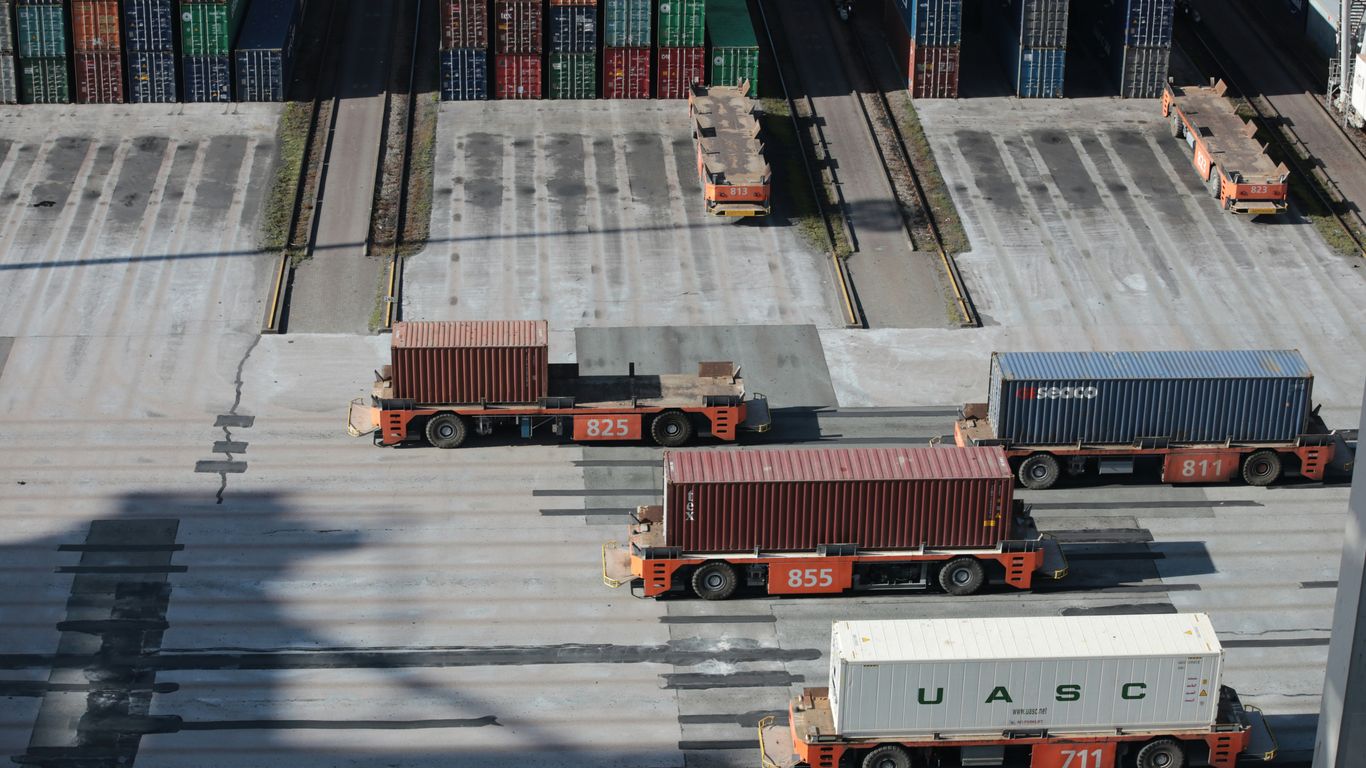
Transit time is a planning input, not a guarantee in isolation. Compare the provider’s published schedules with its actual results on a similar lane and cargo profile. Measured performance matters most when a late delivery could interrupt production, breach a customer commitment or create storage costs.
Published transit times versus actual performance
Ask whether quoted transit time covers collection, port or airport handling, customs processing and final delivery, or only the main carriage. Request a range or recent performance history where possible. A slightly longer but consistently achieved service may be more useful than an attractive schedule that excludes several operational stages.
On-time pickup and delivery rates
Define what “on time” means before comparing statistics. Does the measure use the requested collection date, the confirmed appointment or the first available slot? Delivery should be assessed against the agreed milestone and should distinguish carrier delay from incomplete instructions, late cargo readiness or customs intervention.
Milestone tracking and exception alerts
A tracking page is helpful only when events are updated promptly and exceptions are visible. Confirm which milestones are recorded, how often data is refreshed and whether the system combines information from different carriers and modes. A useful process also assigns someone to investigate an exception rather than merely displaying it.
Service-level agreements and performance reporting
A service-level agreement should set out responsibilities, reporting frequency, escalation points and the treatment of recurring failures. Monthly reporting can reveal patterns in collection delays, documentation errors, transit variance and response times. Keep the measures tied to business consequences so that the review leads to practical changes.
A general explanation of global freight forwarding can help new team members understand the distinction between booking, carriage, customs and delivery. It should supplement, rather than replace, lane-specific service data.
Examine customs and regulatory support
Border compliance is a separate workstream within an international shipment, even when the same forwarder coordinates transport. Responsibilities should be agreed between the importer or exporter, the forwarder, any customs broker and the declaring agent. Good support makes information easier to validate; it does not remove the importer’s responsibility for accurate commercial data.

Import and export documentation processes
Ask for a document list tailored to the goods, destination and Incoterms. Commercial invoices, packing lists, transport documents, permits and origin evidence should be collected early and checked for consistency. A central handover process is helpful because missing or conflicting information often causes delay before the cargo itself becomes the problem.
Customs brokerage and classification expertise
Confirm who reviews commodity descriptions and HS codes, who submits declarations and who communicates questions from customs authorities. Classification should be based on the product’s actual characteristics and the applicable rules, not a convenient code from an old shipment. Document the approval trail so the business can understand what was declared and why.
Duties, taxes and landed-cost guidance
Request an explanation of the assumptions behind duty, tax, brokerage and disbursement estimates. Clarify whether the quote uses DAP, DDP or another arrangement, and identify who pays each charge at the border. This customs clearance fees guide can help teams distinguish common charges before they compare offers.
Compliance controls for restricted or regulated goods
Restricted goods may require permits, licences, certificates, special packaging or advance approvals. Ask how the provider screens the cargo description, checks document expiry and records approval status. For Singapore operations, trade facilitation support is a relevant reference point for workflows involving permit applications, HS code validation and document archiving.
Do not assume that a forwarder can control a regulator’s decision or a carrier’s acceptance. The practical question is whether the provider identifies requirements early, keeps the information organised and coordinates responses within the agreed scope.
Evaluate pricing transparency and total landed cost
Price comparison is meaningful only when every quote is built on the same shipment assumptions. Check the service scope, Incoterm, currency, validity period, routing and delivery point before ranking offers. The cheapest headline figure can become the most expensive option after handling, storage, rebooking or customs charges are added.
Quoted rates, surcharges and accessorial fees
Request a line-by-line quotation that distinguishes main carriage from origin, destination and administrative charges. Ask which fees are fixed, estimated or payable only if a defined event occurs. The quotation should also state exclusions, such as special handling, inspections, delivery waiting time or documentation amendments.
Fuel, currency and peak-season adjustments
Understand how fuel, exchange-rate and peak-season adjustments are calculated and when they may be applied. A transparent formula is easier to budget for than an undefined discretionary surcharge. For recurring shipments, request an example showing how the price would change under plausible market conditions.
Demurrage, detention and storage cost policies
Clarify free-time allowances, the trigger for each charge and the party responsible for preventing it. Ask how the provider handles delays caused by missing documents, terminal congestion, late collection or consignee unavailability. This is also a useful place to review the customs handover guide, particularly its emphasis on early document submission and clear role allocation.
Balancing price certainty with service quality
A fixed price may provide certainty, but only if its scope is precise. Conversely, a flexible estimate may be sensible for volatile lanes if the assumptions and approval process are explicit. Compare the likely total cost over a representative shipment cycle rather than choosing on the first number in the quotation.
A simple comparison table can make hidden differences easier to see:
| Cost or service factor | Quote A | Quote B | Question to resolve |
|---|---|---|---|
| Main carriage and routing | Included | Included | Are the routes and schedules comparable? |
| Origin and destination handling | Partly stated | Itemised | Which activities are excluded? |
| Customs and documentation | Estimated | Fixed fee | What assumptions support the figure? |
| Storage, detention and waiting time | Not stated | Capped | When do charges begin? |
The table is not a substitute for commercial judgement. It gives procurement and operations teams a common record of what each provider has actually offered.
Review technology, communication and customer support
Technology should reduce uncertainty, not create another disconnected portal. Evaluate how shipment information enters the provider’s system, how updates are validated and how exceptions reach the people who must act. A simple, dependable communication routine is often more valuable than a sophisticated interface that carries incomplete data.
Shipment visibility across carriers and modes
Ask whether tracking covers the whole movement or only the main carrier leg. Confirm how the provider handles transhipments, customs holds, warehouse receipts and final-mile delivery. Visibility is useful when it shows the next required action and the responsible party, not merely a sequence of historic scans.
Systems integration and data exchange options
Discuss available options for email, spreadsheets, portals, APIs or structured data exchange. Integration should preserve consistent shipment references, document versions and status definitions. Start with the information the operation genuinely needs rather than accepting a technical project that adds complexity without improving control.
Named contacts and escalation procedures
A named operational contact should be supported by a clear backup and escalation route. Ask who handles urgent bookings, document discrepancies, customs queries and delivery failures outside normal hours. For urgent movements, a documented handover is essential so that responsibility does not disappear between shifts or suppliers.
Reporting, analytics and proactive communication
Regular reports should show agreed measures such as on-time performance, open exceptions, document defects and additional charges. The provider should explain material changes before they become surprises on an invoice or delivery schedule. Teams that need a single accountable workflow may also review Freight Forwarder Support Services when assessing documentation, clearance coordination and routing support.
Build a practical scorecard for selecting a forwarder
A scorecard turns a broad discussion into a decision that can be explained internally. Keep the categories few enough to use, but specific enough to distinguish a polished proposal from an executable service. The final choice should reflect operational risk, not simply the provider with the highest overall marketing score.
Weighting reliability, compliance and responsiveness
Set weights according to the shipment’s consequences. A time-critical component may prioritise reliability and escalation speed, while a controlled product may place compliance and document accuracy first. Record the reason for each weight so that the result can be revisited when the business or trade lane changes.
Checking references, certifications and financial stability
Speak with references whose shipment profiles resemble your own, and ask about missed milestones, billing disputes and issue resolution. Verify relevant certifications or memberships rather than treating logos as proof of performance. Financial stability also matters because a provider under pressure may reduce capacity, support or payment flexibility at the point the customer needs continuity.
Testing the relationship with a pilot shipment
A pilot shipment provides evidence that the proposed contacts, systems and document routines work in practice. Use a shipment that is representative but not so critical that an early process flaw would cause severe harm. Review booking speed, information quality, exception handling, invoice accuracy and delivery closure before expanding the relationship.
Reviewing performance and renegotiating requirements over time
The scorecard should remain active after appointment. Hold regular reviews, compare results with the agreed baseline and update routing or service requirements when volumes, products or markets change. If a provider cannot meet a requirement, document the corrective action, owner and review date rather than allowing an informal promise to become the operating standard.
A wider procurement review may also involve an operations consultancy assessment, provided its focus remains relevant to the organisation’s processes and data. Separately, links about gaming, consumer finance and home radon systems are unrelated to freight decisions; they should not influence a forwarder selection simply because they appear in a general search result. The same discipline applies to any request for a quote: provide the shipment, timing and document details needed for a meaningful assessment.
Request a Quote
Share the shipment details, timing and available documents with IMPORT.SG so the agreed customs, documentation and coordination scope can be assessed clearly.
Conclusion
Choosing international freight forwarding services is a risk and workflow decision as much as a transport purchase. A fair comparison joins network capability, measured reliability, customs discipline, transparent charges, useful communication and accountable service ownership. With defined requirements, a practical scorecard and a representative pilot, businesses can select a partner on evidence rather than price alone.
Frequently Asked Questions
What does an international freight forwarder do?
A freight forwarder coordinates transport and related shipment activities, which may include bookings, documentation, customs coordination, warehousing and delivery arrangements depending on the agreed scope.
How should I compare freight forwarder quotes?
Use the same shipment assumptions for every quote and compare the complete cost, including handling, customs, storage, delivery, surcharges and any stated exclusions.
Which transport mode is best for international cargo?
The appropriate mode depends on the cargo, deadline, budget, lane, risk profile and available capacity. Some shipments benefit from a combination of sea, air, road or rail services.
What performance data should a forwarder provide?
Useful measures include on-time pickup and delivery, transit-time variance, exception response time, documentation accuracy and the frequency of additional charges.
Why does customs support matter when choosing a forwarder?
Accurate documents, classifications, permits and duty assumptions help reduce avoidable border delays and make responsibilities clearer between the shipper, forwarder and customs representative.
How can I reduce unexpected freight charges?
Ask for itemised rates, validity periods, surcharge formulas, free-time allowances and approval rules for accessorial costs before cargo is booked.
Is a pilot shipment worthwhile?
Yes. A representative pilot can test communication, document handling, tracking, exception management, delivery execution and invoice accuracy before a larger commitment is made.