Customs Permits
Certificate of Origin Sample: What Information Appears on a COO

Key Takeaways
A certificate of origin sample is useful because it shows how shipment, product and origin information is brought together in one document.
- A COO identifies the origin of goods, not simply the country from which they were shipped.
- The document normally connects exporter, importer, product, invoice and transport details.
- Preferential certificates support claims for reduced duty when the relevant origin rules are met.
- Product descriptions and HS codes should agree with the commercial invoice and customs declaration.
- A careful document check before submission can prevent avoidable queries and delays.
What a certificate of origin is used for
A Certificate of Origin (COO) records the country in which goods are considered to originate under the applicable rules. Customs authorities, buyers, banks and freight forwarders may request it for different reasons, so the correct form depends on the destination and transaction. A Singapore export COO guide is a useful reference where the country of export and country of origin need to be distinguished.
How origin determines the country shown on the document
The country shown on a COO is based on origin rules rather than the location from which the consignment departs. Goods may be wholly obtained in one country, manufactured there, or subject to sufficient processing that changes their origin under a particular agreement. The evidence supporting that conclusion should be retained with the shipment file.
When customs authorities request a COO
A customs authority may request a COO to verify an origin declaration, apply a trade measure, or assess whether a shipment qualifies for a particular treatment. Buyers and banks can also specify one as part of their documentary requirements. The destination market, product and transaction terms should therefore be checked before the shipment is prepared.
Preferential and non-preferential certificates compared
A non-preferential COO generally confirms origin without itself granting a reduced tariff. A preferential certificate or origin declaration is used when goods are claimed to qualify under a free trade agreement. The distinction matters: using an ordinary certificate where an FTA proof is required may leave the importer unable to claim the intended tariff treatment.
How a COO supports tariff and trade agreement claims
For a preferential claim, the COO links the goods to the agreement’s rules of origin and to the shipment being imported. It does not replace the customs declaration, invoice or transport documents. The FTA origin guidance explains why the required information matters even where a particular agreement does not prescribe one fixed form. A properly supported origin claim is easier for the importer to present and for customs to review.

Core details shown on a certificate of origin sample
Looking at a certificate of origin sample, the layout may appear simple, but each field connects to evidence elsewhere in the shipment file. Names, addresses, references and dates should tell the same story as the invoice, packing list and transport document. The certifying body may also require supporting records before issuing the document.

Exporter and manufacturer information
The exporter is the party sending or declaring the goods, while the manufacturer may be a separate party. A form can ask for both because the manufacturer’s production records may support the origin claim. Legal names and addresses should be copied consistently rather than shortened differently across documents.
Importer or consignee details
The importer or consignee is the party receiving the shipment or named in the transport documentation. Some arrangements also identify a notify party or consignor. These fields should follow the destination requirements and match the commercial and transport records used for clearance.
Shipment references and document numbers
A COO commonly includes an invoice number, transport reference, application number or other identifier that ties it to a specific consignment. These references help an importer and customs reviewer distinguish the document from earlier or later shipments. A general trade documentation checklist can help teams organise these linked records.
Country of origin and destination
The origin field identifies where the goods originate under the relevant rules; the destination field identifies where they are being sent. Neither should be inferred solely from the port of loading. A shipment may leave one country while the goods originate in another.
Issue date and certifying authority
The issue date can affect whether the document is acceptable for the shipment or tariff claim. The authority may be a chamber, an approved body, or an authorised exporter arrangement, depending on the certificate type. Confirm the destination’s requirements before assuming that a familiar layout or signature will be accepted.
How goods are described on the COO
The goods section is where a broad origin statement becomes tied to identifiable products. Descriptions need to be clear enough for the reviewer to connect them with the invoice, packing list and HS classification. Overly vague wording can create questions, while unnecessary detail can introduce inconsistencies.

Product names and commercial descriptions
Use a plain commercial description that identifies what the goods are and, where useful, their model, material or intended use. A description such as “parts” may be too general if the invoice gives a more precise product name. For instance, Kia OEM parts would need a description that corresponds to the actual items shipped, not merely the brand name.
HS codes and tariff classifications
The HS code classifies the goods for customs purposes, but the relevant code may depend on the importing country’s tariff schedule. It should be checked against the invoice and declaration, with the classification basis recorded where the product is difficult to classify. A COO is not a substitute for a full classification review.
Quantities, weights and packaging details
Quantity, net weight, gross weight and package marks may appear in the goods table or in supporting documents. These details help identify the consignment and reconcile the certificate with the packing list. Units should be used consistently, especially where cartons, pieces and sets are all present.
Invoice numbers and shipment values
The invoice reference anchors the COO to the commercial transaction. Some formats also request invoice date, value, package count or transport details. Values should agree with the invoice, while any country-specific rule about whether values must appear on the COO should be followed.
How multiple products are listed
Multiple products can be shown as separate lines, provided each line can be matched to its HS code, quantity and origin basis. If several items share the same origin, they should still be distinguishable enough for review. A tidy line-by-line structure is often safer than combining unrelated goods into one vague description.
How origin is determined and recorded
Origin analysis begins with the goods and their production history, then applies the rules relevant to the destination and any claimed preference. The supporting file may include supplier declarations, bills of materials, manufacturing records, invoices and production flow information. A country-of-origin evidence guide provides a useful reminder that the certificate should be supported by records, not treated as evidence in isolation.
Wholly obtained goods
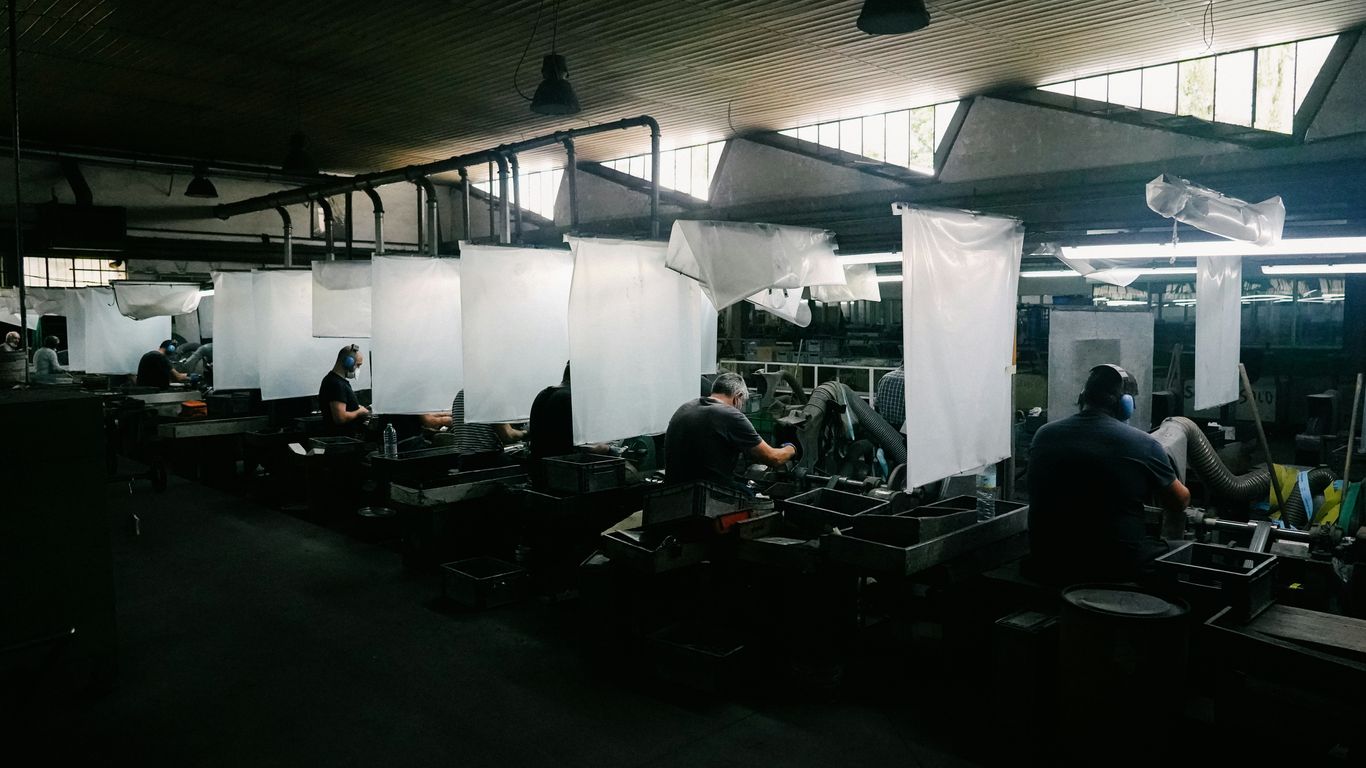
Wholly obtained goods are produced or collected entirely in one country, subject to the definition used by the applicable rules. Examples may include certain agricultural products, minerals or goods harvested within the territory. The precise category must be checked against the governing agreement rather than assumed from the product’s apparent simplicity.
Goods manufactured in one country
Manufacture in a single country does not automatically settle origin if imported materials are used. The production process and the product-specific rule determine whether the finished goods qualify. Production records should make the manufacturing steps and inputs clear.
Products made with imported materials
Imported materials can be permitted when the finished product meets a required change in tariff classification, regional value content or processing test. Supplier declarations and bills of materials help demonstrate which inputs are originating and which are not. Records should be specific to the product and period under review.
Substantial transformation and processing rules
Substantial transformation describes a level of processing that changes the origin status of goods under the relevant legal test. The threshold is not universal: a process that is sufficient for one product or agreement may not be sufficient for another. Minimal operations may be excluded, so the production description should be tested carefully.
Product-specific rules under trade agreements
Trade agreements often set product-specific rules, including tariff-shift requirements, regional value calculations or required processing. The exporter should identify the correct rule before completing the certificate and preserve the calculations or records supporting it. For ASEAN shipments, the Form D origin requirements illustrate how product descriptions, HS codes and origin criteria work together.
Differences between common COO formats
COO formats differ in who certifies the document, what data fields are compulsory and whether a paper original is needed. A certificate can look familiar while still being unsuitable for the destination or agreement. The safest approach is to confirm the required proof of origin for the particular shipment.
Chamber-issued certificates of origin
A chamber-issued certificate is commonly completed by the exporter and submitted to an authorised chamber or similar issuing body for certification. The body may review the application and supporting documents before applying its certification. Requirements, fees and acceptable evidence vary by jurisdiction.
Exporter-originated statements
Some arrangements allow an exporter, producer or approved party to make an origin statement rather than obtain a chamber-stamped form. This can be placed on an invoice or another commercial document when the agreement permits it. The statement still needs the prescribed data and a supportable origin basis.
FTA certificates and origin declarations
FTA proof of origin is tied to a specific agreement and its rules. It may be a formal certificate, an invoice declaration or another approved declaration. The preferential origin overview sets out the practical distinction between these proof options and ordinary origin documents.
Electronic and paper certificates
Electronic COOs can reduce manual handling and make status tracking easier, but they still require accurate data and supporting records. Acceptance of electronic transmission, digital signatures or scanned copies depends on the relevant authority and destination. The electronic COO workflow explains how exporters, issuing bodies, forwarders and customs authorities may interact in a digital process.
The format alone does not make an origin claim valid. It is the combination of an accepted method, complete data and appropriate evidence that gives the document practical value.
Country-specific layout and certification requirements
Some destinations prescribe fields, wording, seals, signatures, validity periods or application routes. Others accept a declaration containing specified data elements without a fixed template. Before preparing a form, compare the buyer’s instructions with the importing authority’s requirements and the relevant agreement.
How to check a certificate of origin sample
A final review should treat the COO as one part of a connected shipment file. Read it against the invoice, packing list, transport document, purchase order and customs declaration rather than checking the certificate in isolation. IMPORT.SG Certificate of Origin service can be considered when an agreed scope calls for coordinated document intake and origin application support.
Matching the COO with commercial documents
Compare the exporter, importer, product descriptions, HS codes, quantities, weights, invoice number and destination across the documents. Small differences in punctuation may be harmless, but different legal entities, values or product lines deserve investigation. The goal is a consistent transaction record.
Verifying signatures, stamps and issuing bodies
Check that the document was signed or certified by the party permitted under the certificate type. For a chamber-issued form, verify the issuing body and any authentication details. For an exporter declaration, confirm that the declarant is entitled to make it and has the required evidence.
Checking dates and shipment references
Review the issue date, invoice date, transport reference and any validity or presentation deadline. A certificate issued for the wrong shipment or outside the permitted period may not support the intended claim. Cross-checking these fields early leaves time for correction.
Identifying incomplete or inconsistent information
Common warning signs include blank mandatory fields, unexplained amendments, mismatched HS codes and descriptions that do not identify the goods. Other issues include an origin country that differs from the supporting records or a consignee that does not match the transport document. Each discrepancy should be resolved before submission.
Correcting errors before customs submission
Do not overwrite a certified document without following the issuing body’s correction process. Ask whether the form must be amended, reissued or accompanied by an explanation, and keep the superseded version in the file. A short document review request is most useful when it states the shipment, deadline and documents available for comparison.
A practical pre-submission check can be organised into five steps:
- Confirm the applicable certificate type and destination rule.
- Reconcile every shipment reference with the commercial documents.
- Test the origin basis against the relevant product rule.
- Verify certification, signatures, dates and mandatory fields.
- Record corrections and retain the supporting evidence.
This sequence does not replace advice from the relevant authority, but it gives an operations team a repeatable way to find avoidable errors before the file is lodged.
Conclusion
A certificate of origin sample is best read as a map of the shipment: it connects the parties, goods, references and origin evidence needed for the destination’s customs or trade requirements. When those details agree across the file, the COO is clearer to review and less likely to create preventable questions.
Frequently Asked Questions
Is a certificate of origin the same as a customs declaration?
No. A COO attests to the origin of goods, while a customs declaration reports information required for import or export clearance, such as classification, value and procedure.
Does the country of shipment determine origin?
Not necessarily. Goods may be shipped from one country after being manufactured or substantially processed in another, so origin must be determined under the applicable rules.
What is the difference between preferential and non-preferential origin?
Preferential origin is used to support a claim under a trade agreement. Non-preferential origin generally confirms where goods originate without providing a reduced tariff by itself.
Which documents support a COO application?
Depending on the case, supporting documents may include a commercial invoice, packing list, transport document, supplier declaration, bill of materials and manufacturing records.
Must every COO use the same form?
No. Some authorities or agreements use prescribed forms, while others accept declarations containing required data elements. The destination and agreement determine the acceptable format.
What should be checked first on a COO?
Start by confirming the certificate type, destination, exporter, goods description, HS code and shipment references. Then compare those details with the invoice and packing list.
Can a COO be corrected after certification?
Often a correction or reissue is possible, but the process depends on the issuing body and certificate type. Corrections should be handled through the permitted procedure rather than informal alterations.